Inpatient vs outpatient coding comes down to different rules for procedures, diagnoses, and payment. Inpatient hospital stays use ICD-10-PCS for procedures and are paid by MS-DRG. Outpatient encounters use CPT and HCPCS for procedures and are paid by fee schedule or, for hospital outpatient departments, by APC. The diagnosis rules are different too, and that’s where coders moving between settings most often make mistakes.
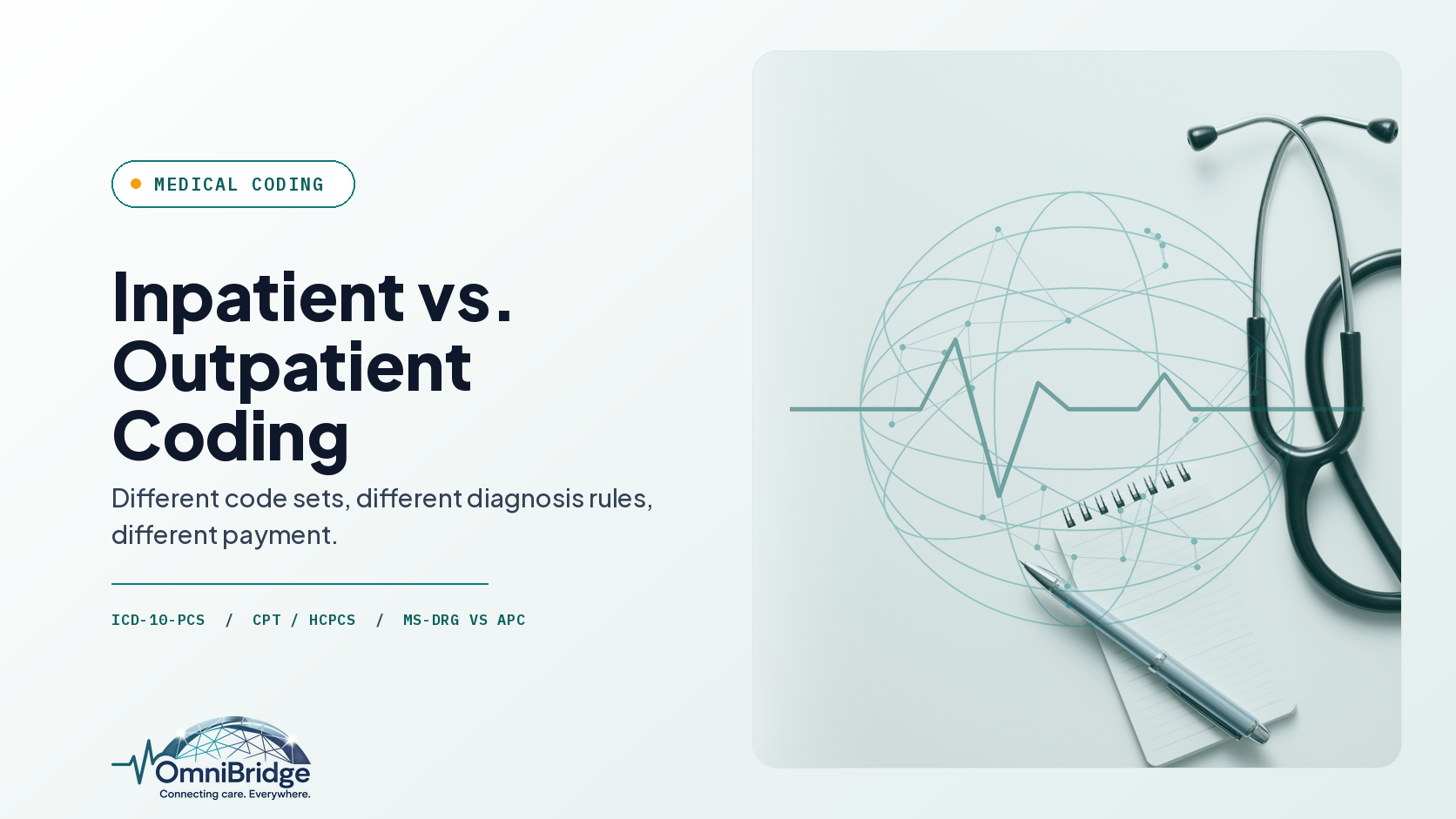
Inpatient vs. Outpatient Coding at a Glance
- Procedure codes: inpatient facility coding uses ICD-10-PCS. Outpatient uses CPT and HCPCS Level II.
- Diagnosis codes: both use ICD-10-CM.
- Main diagnosis: inpatient uses the “principal diagnosis,” the condition found after study to be chiefly responsible for the admission. Outpatient uses the “first-listed diagnosis,” the main reason for the encounter.
- Facility payment: Medicare pays inpatient stays under the IPPS using MS-DRGs, and hospital outpatient services under the OPPS using APCs.
- Physician services: in both settings, the physician’s professional services are coded with CPT and billed separately from the facility.
How Do Uncertain Diagnoses Differ?
This is the biggest rule difference between the two settings.
- Inpatient: if the diagnosis at discharge is documented as “probable,” “suspected,” “likely,” “questionable,” “possible,” or “still to be ruled out,” it’s coded as if it existed. This applies to short-term acute, long-term care, and psychiatric hospitals.
- Outpatient: uncertain diagnoses aren’t coded. If there’s no confirmed diagnosis by the end of the encounter, you code the signs and symptoms instead (ICD-10-CM Official Guidelines, Section IV).
A coder who applies the inpatient rule to an outpatient visit ends up reporting conditions the patient may not have, which is a compliance problem and can follow the patient’s record.
Inpatient or Outpatient? The Two-Midnight Rule
For Medicare, whether a hospital stay is billed as inpatient depends on the two-midnight benchmark. CMS says inpatient admissions are generally payable under Part A when the admitting practitioner expects the patient to need a medically necessary stay that crosses two midnights. Stays expected to be shorter are generally outpatient, often observation, with exceptions for inpatient-only procedures and case-by-case decisions supported by documentation.
Why the Setting Changes the Coding Workflow
- Inpatient coding covers the whole stay. The coder reviews the full record at discharge, and coding delays hold up the bill and add to days in A/R.
- Outpatient coding is per encounter, higher volume, and more exposed to NCCI edits and modifier rules.
For the code sets themselves, see our CPT, ICD-10, and modifier guide.
Frequently Asked Questions About Inpatient vs. Outpatient Coding
Do inpatient coders use CPT codes?
Not for the hospital’s facility claim. Inpatient facility procedures are coded with ICD-10-PCS. Physicians’ professional services during the stay are still coded with CPT.
Can you code a probable diagnosis in the outpatient setting?
No. In outpatient coding, uncertain diagnoses such as probable or suspected are not coded. Signs and symptoms are coded instead.
What is the difference between principal diagnosis and first-listed diagnosis?
Principal diagnosis is the inpatient term for the condition found after study to be chiefly responsible for the admission. First-listed diagnosis is the outpatient term for the main reason for the encounter.
How does Medicare decide if a stay is inpatient?
Under the two-midnight benchmark, an admission is generally payable under Part A when the admitting practitioner expects a medically necessary stay crossing two midnights.
What OmniBridge Actually Does
We match coders to the setting they’re coding, audit outpatient claims for inpatient-style diagnosis errors, and track coding turnaround so it doesn’t hold up billing.
If your coding team works across both settings, request a free practice audit and we’ll check a sample for setting-specific errors.